Matcha Matters
Understanding why matcha nourishes body and mind differently than coffee, tea and other super-foods
The Matcha Difference
Delving into matcha’s unique blend of calm energy, antioxidants, and whole-leaf nourishment for lasting wellbeing.
Most drinks and health foods work by adding something.
They add energy.
They add nutrients.
They add caffeine, sweetness, stimulation.
They are designed to push you forward.
Matcha works in the opposite direction.
It doesn’t add.
It removes.
Not from the body —
but from the mind.
Drinking matcha means subtracting noise.
Mental noise
Emotional clutter
Work-related distractions
The constant hum of social media
Matcha doesn’t excite the mind.
It clears it.


Why matcha creates this state
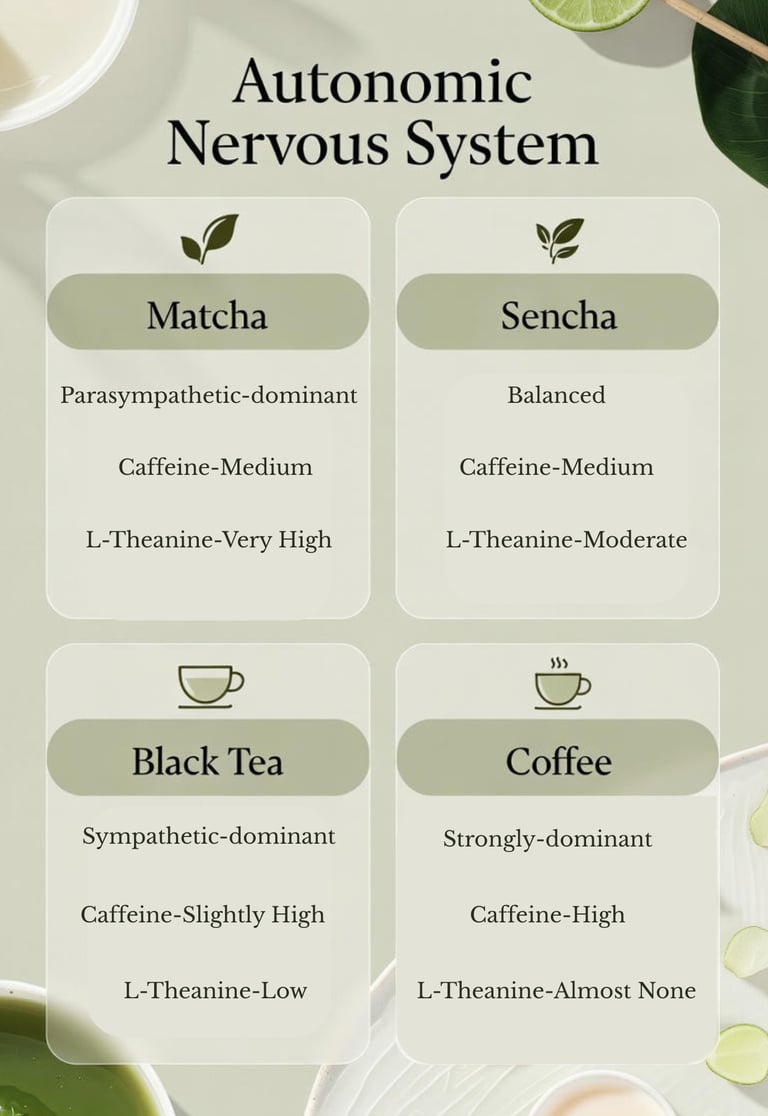
L-Theanine calms anxiety and smooths the mind
Medium-Caffeine removes drowsiness without agitation
Bitterness brings awareness back to the present moment
The result is a rare condition:
Alert, but not loud
Awake, but calm
This is not something coffee can create.
Coffee stimulates.
Matcha stills.
Coffee accelerates thought.
Matcha creates space between thoughts.
Matcha is not a drink to add more to your day.
It is a drink to make room in it.
A quiet clarity.
A calm wakefulness.
A space to return to yourself.
When is matcha best enjoyed?
1. Morning to late morning (as an alternative to coffee)
Best enjoyed in the morning to late morning, as an alternative to coffee.
Matcha contains caffeine, but its high L-theanine content promotes calm, steady focus rather than sharp stimulation.
2. During work or study breaks (when focus starts to fade)
Ideal during work or study breaks, when concentration begins to drop.
Matcha helps maintain sustained focus without sudden energy crashes.
3. When your mind feels restless or overstimulated
A good time to drink matcha is when your mind feels busy or unsettled.
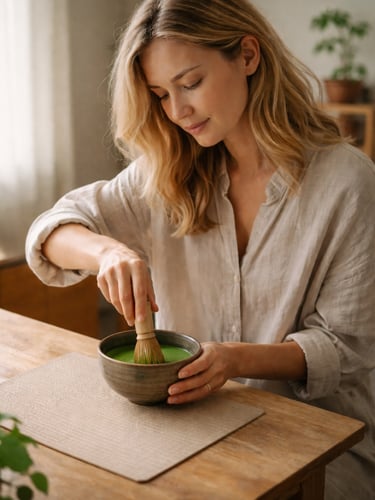
The act of preparing matcha naturally slows breathing and helps restore balance.
4. Not immediately after a meal — after a short pause
Rather than drinking it immediately after a meal, matcha is best enjoyed after a short pause.
Waiting 20–30 minutes allows its umami and natural sweetness to come through more clearly.
5. Generally not recommended at night (with some exceptions)
Matcha is generally not recommended at night due to its caffeine content.
However, some people enjoy a smaller amount prepared at a lower temperature.

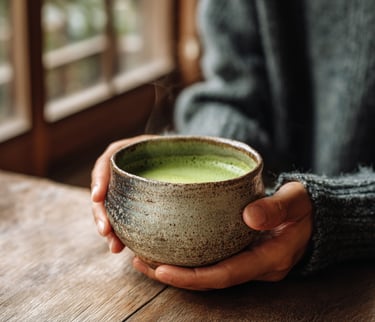
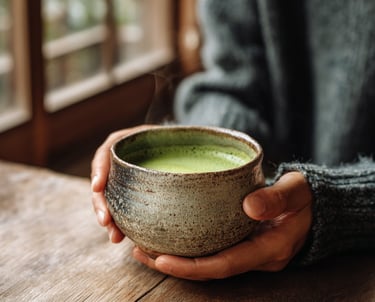


Matcha FAQs
What makes YOHAKU MATCHA different from other matcha?
YOHAKU MATCHA is Uji-grown, first-harvest matcha, stone-milled in the traditional way.
Will matcha make me calm or focused?
How much matcha should I use?
What if I find matcha too bitter?
Is it okay to drink matcha every day?
Use 1 teaspoon (about 2–2.5g) of matcha.
Add around 60ml of hot water, then whisk with a bamboo whisk (chasen) until lightly foamy.
No chasen? No problem.
A small whisk or milk frother works just fine.
Matcha has been consumed daily in Japan for centuries.
When enjoyed in a moderate amount, it can be part of a regular routine thanks to its balanced combination of caffeine and L-theanine.
Matcha supports calm focus—alert, but not overstimulated.
If bitterness is a concern, try a Wasanbon Smooth Finish.
If adding milk, keep it under 20% to preserve matcha’s depth.
Contact
Reach out for questions or matcha stories
© 2025. All rights reserved.